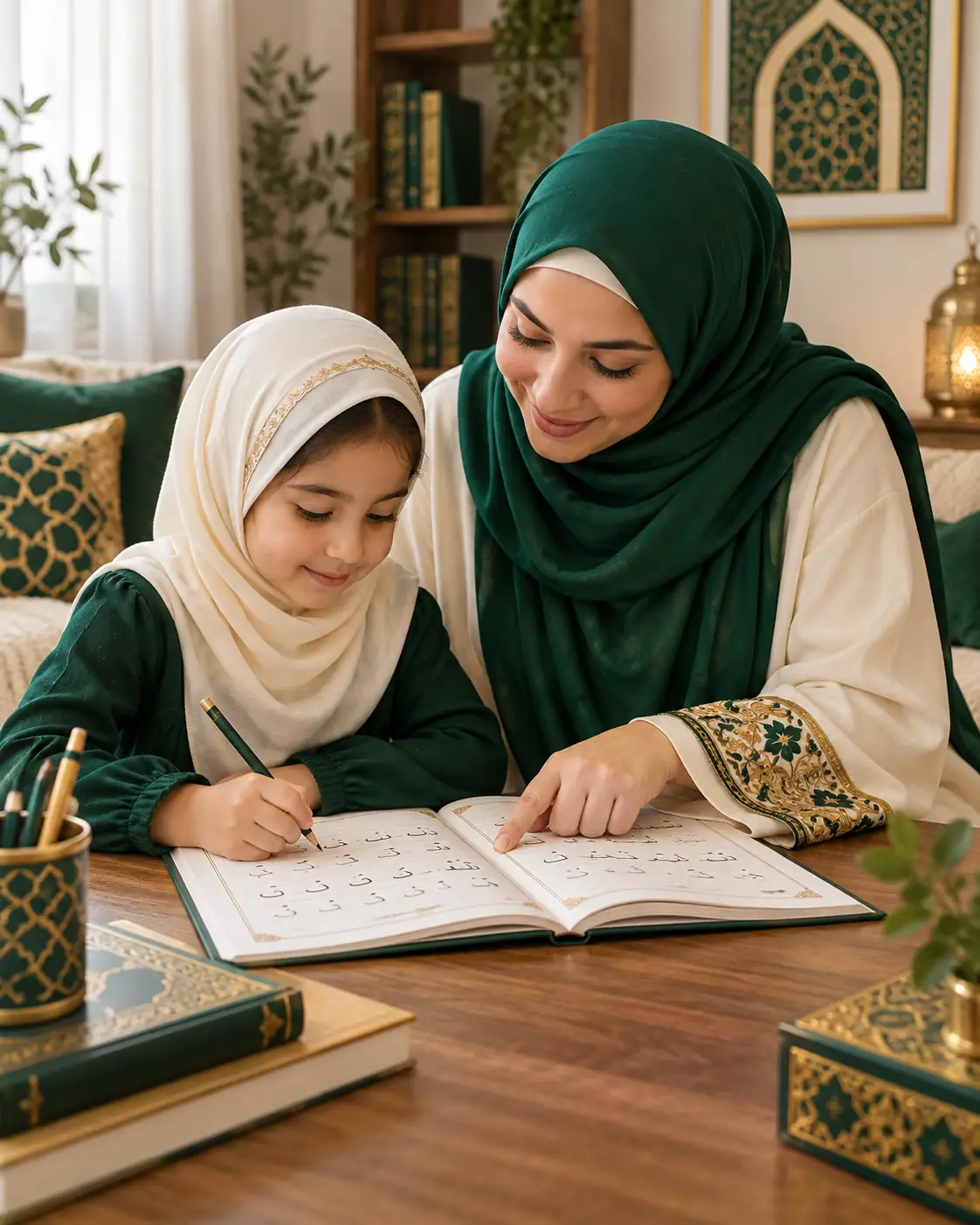
A children’s Islamic Studies programme should do more than deliver disconnected facts. It should help the child build an age-appropriate framework for what Muslims believe, how Muslims worship, how the Prophet ﷺ lived, and how Islamic values appear in everyday behaviour.
The exact depth changes with age, family background and prior learning, but a balanced programme usually needs several connected areas.
1. Core beliefs
Children need a clear and careful introduction to foundational beliefs at a level they can understand.
The aim is not to overload young learners with technical debates. It is to build accurate basic concepts and vocabulary that can deepen later.
Teachers should distinguish established fundamentals from issues where qualified scholars differ.
2. Worship and daily practice
Children should gradually understand the acts of worship they actually encounter.
This can include age-appropriate learning about purification, prayer, fasting and other practices according to the curriculum level.
Teaching should connect knowledge to real actions rather than only asking children to memorise definitions.
Where detailed legal rulings differ between recognised scholarly views, a children’s programme should avoid pretending every detail has only one possible presentation.
3. Seerah
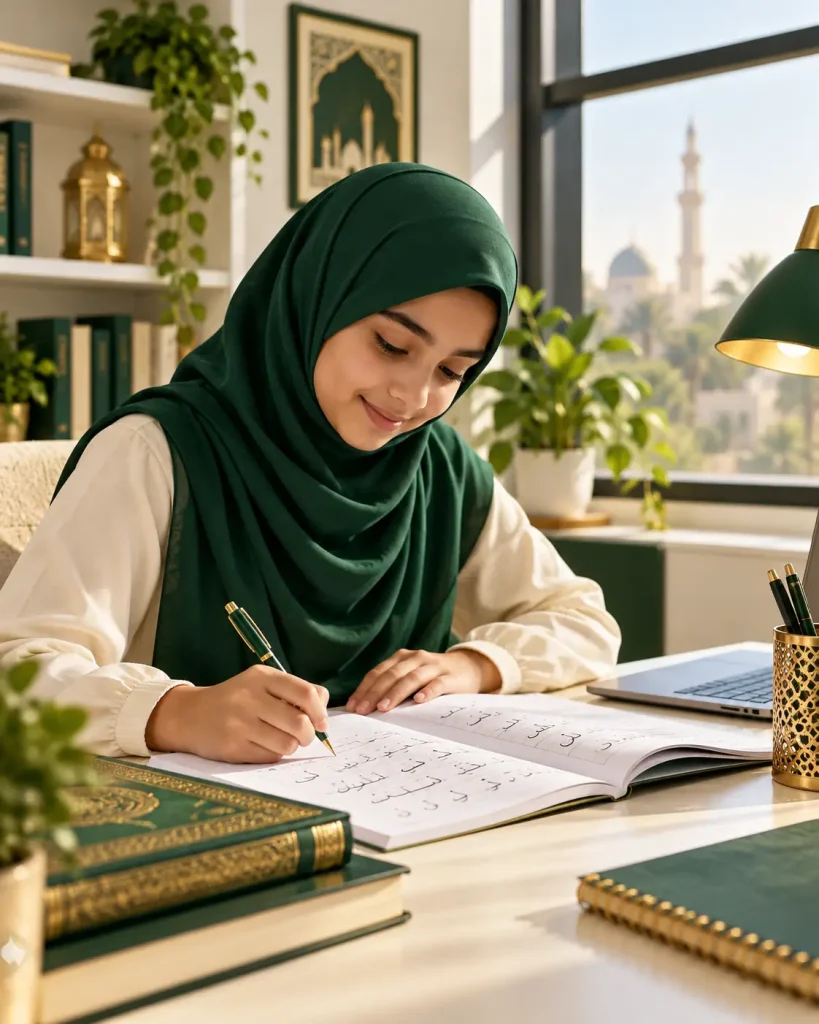
The life of Prophet Muhammad ﷺ gives children a narrative structure for many beliefs and values.
A good seerah lesson is not merely a list of dates.
It can ask:
- What happened?
- What choice was made?
- What can we learn from the event?
- What should we avoid oversimplifying?
Stories should be sourced responsibly and not padded with attractive but unreliable details.
4. Manners and character
Children need practical language for honesty, kindness, patience, respect, responsibility and dealing with mistakes.
Character education becomes stronger when attached to situations the child recognises: family, school, friends, online behaviour and keeping promises.
The goal is application, not slogans.
5. Quran and hadith connection
Appropriate Quran passages and reliable hadith can support lessons, but they should be used carefully.
Teachers should avoid inventing meanings or using a text outside its context simply because it fits a theme.
For younger children, a short well-explained text is better than many quotations they do not understand.

6. Questions should be welcome
Children ask direct questions.
A good Islamic Studies teacher should know the difference between:
- a question they can answer clearly;
- a question that needs a simpler explanation;
- a question that requires checking a reliable source or referring to a qualified scholar.
Saying “I need to verify that” is better than guessing.
7. Assessment should include understanding
A child who memorises five definitions may still be unable to explain the lesson in their own words.
Useful assessment can include:
- simple recall;
- explaining an idea;
- choosing an action in a scenario;
- connecting a lesson to daily life;
- revisiting the idea later.
This reveals whether the material became meaningful.
8. Age progression matters
A six-year-old and a fourteen-year-old should not receive the same explanation with only different worksheets.
As children mature, the programme can add more vocabulary, evidence, reasoning and nuance.
A curriculum should therefore show progression rather than endlessly repeat the same basic topics.
9. Parent communication helps
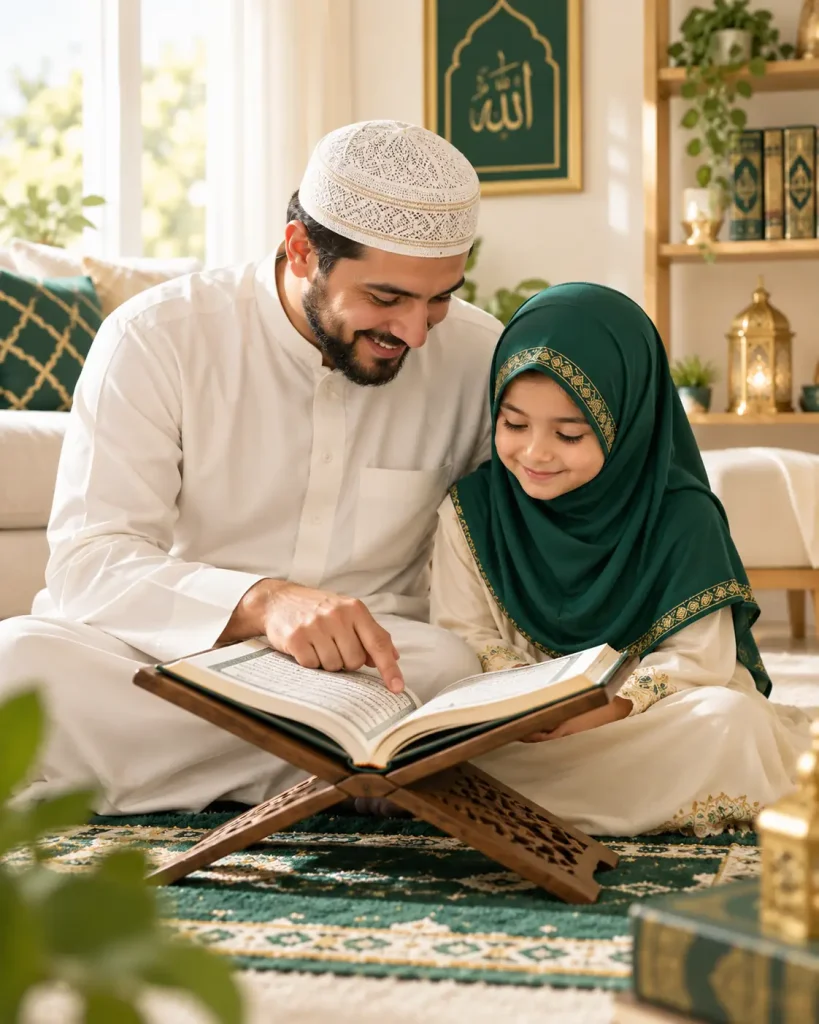
Parents benefit from knowing the current topic and one simple way to reinforce it at home.
This does not require turning parents into teachers. A short prompt can connect class to family life.
A balanced structure
A programme can rotate through:
- beliefs;
- worship;
- seerah;
- manners and character;
- Quran/hadith-supported themes;
- practical application;
- review.
The balance prevents Islamic Studies from becoming either pure memorisation or unstructured storytelling.
Anas Bin Malik Academy’s Islamic Studies for Kids programme can use this framework alongside its teaching methods so that the content remains structured, age-appropriate and connected to practice.
Related reading
- How to choose an online Quran teacher for your child
- How parents can track Quran progress without counting pages
Relevant learning paths
FAQ
Should Islamic Studies for children include fiqh?
It can include age-appropriate worship and practice, while handling recognised scholarly differences carefully.
Should children memorise evidence?
Selected Quran and reliable hadith can be useful, but understanding and context matter as well as memorisation.
Is seerah enough for an Islamic Studies programme?
No. Seerah is important, but a balanced programme also needs beliefs, worship, character and practical application.