
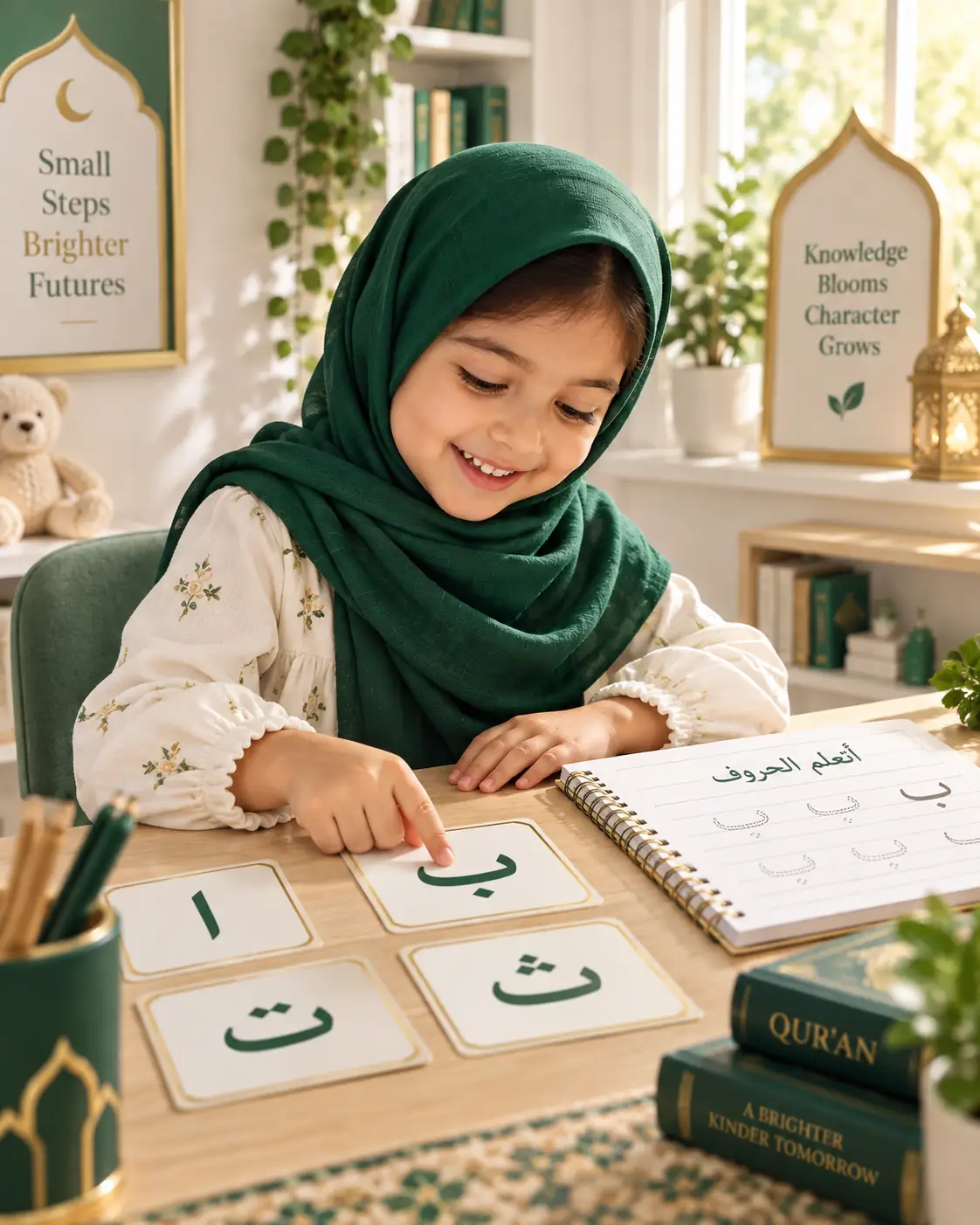
The right number of Quran lessons per week depends on what happens between lessons as much as what happens during them.
One long lesson each week can work for a motivated adult who practises independently. A young beginner may benefit more from shorter, more frequent contact. A Hifz student may need enough lesson frequency for regular correction and accountability.
There is no honest weekly number that fits every learner.
Start with the learning goal
Different goals create different scheduling needs.
Reading foundations
A beginner learning letters, vowels and blending benefits from regular contact because long gaps make small reading patterns easy to forget.
Shorter sessions spread through the week can work better than one heavy session.
Tajweed improvement
A learner who already reads may need enough time between lessons to practise one correction and then return for feedback.
Too many lessons without practice can turn the teacher into the only moment when the skill exists.
Hifz
Memorisation usually depends on frequent independent repetition. The teacher’s lesson is for listening, correction, planning and accountability—not for doing all repetition inside class.

Lesson frequency should match how often the student needs checked work.
Consider the learner’s age
Young children usually have shorter attention windows.
A 25-minute focused session may produce more useful reading than a 60-minute session that loses the child halfway through.
Older learners may handle longer lessons, but concentration still matters.
Ask how much practice happens between lessons
Two students with the same weekly schedule can progress differently because one practises and the other does not.
If there is no home practice, increasing lessons may help, but it can also become expensive repetition of the same material.
Sometimes the better solution is a smaller, clearer home task.
Watch for too few lessons
The schedule may be too light when:
- every lesson begins by rebuilding the previous lesson;
- the learner forgets the correction before the next meeting;
- long gaps reduce routine;
- Hifz submissions become too large for useful correction.
In that case, more frequent contact may help.

Watch for too many lessons
More is not automatically better.
The schedule may be too heavy when:
- the learner has no time to practise independently;
- recent corrections are not absorbed;
- the child shows clear fatigue;
- lessons are repeatedly cancelled;
- the family cannot sustain the timetable.
A schedule that looks impressive but cannot be maintained is weaker than a realistic one.
A practical starting framework
This is not a universal prescription.
Young beginner: consider shorter, regular sessions rather than one long weekly class.
Older beginner or adult: one to several sessions can work depending on independent practice and correction needs.
Hifz learner: schedule enough teacher contact to check new and revised material, while protecting daily independent repetition.
After two or three weeks, adjust using evidence.
What evidence should you use?
Track:

- how much prompting is needed;
- whether previous corrections remain;
- how much home practice is completed;
- cancellation and fatigue patterns;
- whether the learner arrives prepared;
- whether the current goal is moving.
Do not increase frequency simply because “more classes must be better”.
Consistency matters
A moderate schedule that continues for months usually beats an intense schedule that collapses after two weeks.
Families should choose lesson times that fit school, work, sleep and prayer routines realistically.
Anas Bin Malik Academy’s teaching approach can support different lesson frequencies because the useful schedule should follow the learner’s goal, level and ability to practise.
Related reading
- How parents can track Quran progress without counting pages
- One-to-one Quran lessons or group classes: which format fits?
Relevant learning paths
FAQ
Are three Quran lessons per week always better than one?
No. The answer depends on age, goal and practice between lessons.
Should young children take long Quran lessons?
Often shorter, focused lessons are easier to sustain, but the right duration depends on the child.
Can one lesson per week work?
Yes for some learners, especially when independent practice is strong and the goal is appropriate.